How We Show Them God: Faith Begins With Safety
I’m starting a new series about faith through the seasons of motherhood—what our children are learning about God, what we’re teaching them, and how our role changes as they grow.
Infancy | Faith Through the Seasons of Motherhood
Before your baby understands the word God…before they can sit through a Bible story…before they can say a prayer…before they can understand who Jesus is…
They are learning something. They are learning what it feels like to be human. They are learning whether the world is safe. Whether their needs matter. Whether someone will come when they cry. Whether they can rest. Whether they are worthy of care. And as Christian mothers, this gives us a beautiful place to begin thinking about faith formation. Before our children understand what we teach them about God, they experience something about God through the way we love them.
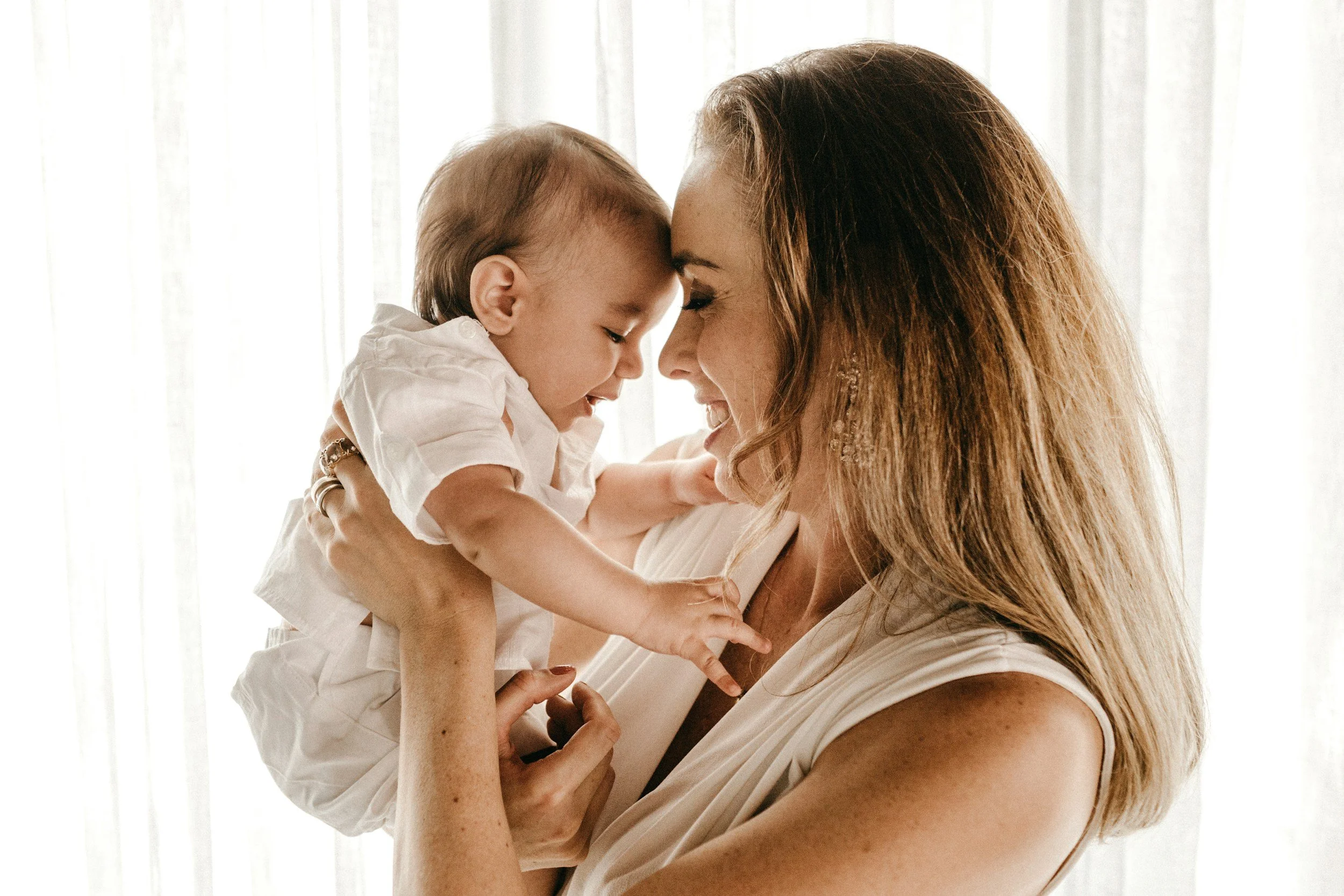
The beginnings of understanding faith really start with the experience of attachment.
That doesn’t mean we have to be perfect. It means that in the ordinary, exhausting, repetitive moments of infancy, there are opportunities for connection, safety, and trust.
Faith Begins Before Belief
When we think about raising children in the Christian faith, we often think about what we need to teach; Bible stories, prayer, church, worship, Scripture. And those things matter. But infancy reminds us that faith development begins much earlier than a child can cognitively understand a theological concept. An infant’s brain is developing through relationship. Through repetition. Through being held. Through being soothed. Through hearing a familiar voice. Through experiencing a caregiver who comes back again and again.
This is attachment.
And attachment is foundational to how children learn to experience relationships, regulate emotion, and eventually understand themselves and the world around them. So before we’re asking, “How do I teach my baby about God?” Perhaps we can also ask: “What is my baby learning about love?”
When They Cry, They Are Not Manipulating You
A crying infant isn’t giving you a theological test. They aren’t manipulating you. They aren’t trying to make your life difficult. They are communicating the only way they know how. I’m hungry. I’m uncomfortable. I’m scared. I’m tired. I need you. And when you respond, something important is happening. Your baby begins to learn: my needs matter, someone hears me, someone comes. I am not alone.
Of course, no mother can respond perfectly every time. You will miss cues. You will become frustrated. You will need a break. You will sometimes respond later than you wish you had. That is not failure.
Attachment does not require perfection. It is built through consistent enough connection and repair.
You Are Not God
Your child does not need you to perfectly represent God. You cannot. You are human. You will lose patience. You will get overwhelmed. You will make mistakes. You will sometimes respond from your own wounds.
And perhaps one of the most important things we can teach our children about grace is that relationships can experience rupture and then repair.
You can say: “Mommy was frustrated. I’m sorry I yelled. You didn’t deserve that. I love you, and we’re okay.” Even before your child understands those words, you are modeling something profound: Love can survive imperfection. Connection can be restored. We can take responsibility for the ways we’ve hurt one another.
That is a powerful foundation for faith.
Your Nervous System Matters Too
Infancy can be an incredibly activating season for mothers. If you’ve been through it, you know why. There is sleep deprivation, hormonal change, constant noise, physical recovery, touch, unrelenting responsibility, isolation. Another need arrives before you have time to re-regulate yourself.
If you find yourself becoming overwhelmed by your baby’s crying, that doesn’t mean you don’t love your baby. It means your nervous system is human too. And this is where I want Christian mothers to release some of the shame around needing support. You don’t have to be endlessly calm to be a safe mother. You don’t have to feel peaceful every minute. You do need opportunities to regulate, reconnect, and repair. Sometimes showing your child what safety looks like begins with recognizing when you need help.
What Does Faith Look Like With a Baby?
It can be wonderfully simple. Here are just some ideas: you can pray while rocking your baby, you can sing worship songs when feeding them, you can read Scripture aloud while they lie beside you, you can tell them about God’s love, you can speak blessing over them.
You can attend church when you can—and give yourself grace when getting everyone out the door feels impossible. Getting to church with a baby is so hard, especially if they don’t mesh well with the caregiving that is available. For babies of Christian moms, this may be their first experience with a caregiver other than family. And it may just feel too hard sometimes. Your flexibility as a mom in not having to go to church every Sunday so that your baby doesn’t have to endure the nursery may be the picture of God, the experience of God that they need. Maybe you need that grace as well.
Faith formation at this stage is not about making your infant perform spirituality. It’s about creating a family culture where God’s love is something they will eventually come to recognize as woven into everyday life. Faith can sound like: “God made you, and I’m so grateful you’re here.” “You are deeply loved.” “We’re going to ask God for help.” “Mommy doesn’t know the answer, but we can pray.” “God is with us when things feel hard.” Simple. Relational. Repeated.
The Theology of Ordinary Care
There is something sacred about the repetitive work of infancy; the middle-of-the-night feeding, the diaper change, the rocking, the bath. The thousands of times you pick them up. The same song sung again and again. The small hand wrapped around your finger.
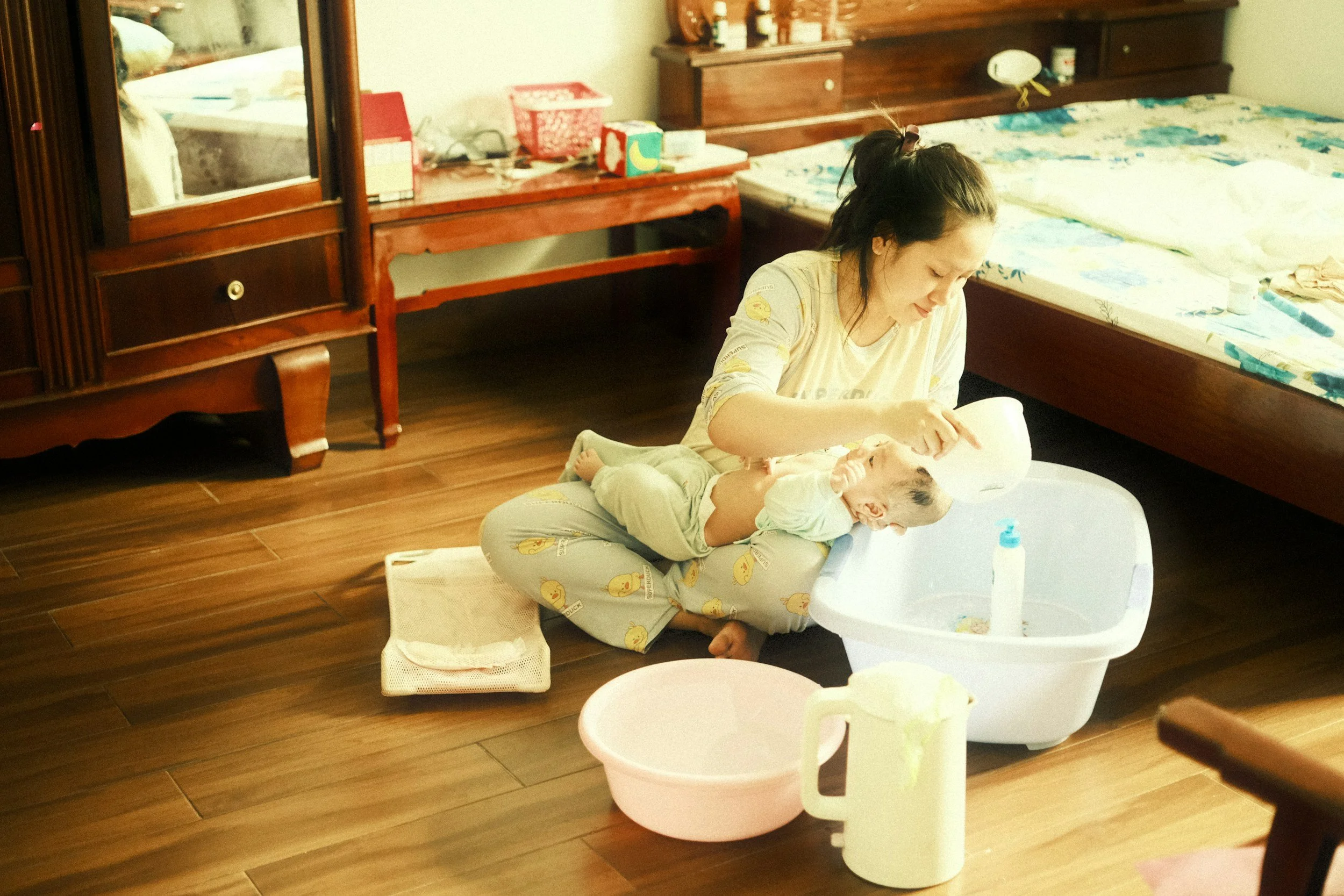
It can feel mundane.
Sometimes it feels painfully mundane.
But these ordinary moments are where a baby’s sense of safety is being built. And perhaps that is one of the beautiful things about Christian motherhood: God is not only found in the extraordinary moments; He is present in the rocking chair, In the kitchen, In the exhaustion, In the repetition, In the caregiving no one applauds. God shows up in the day to day, the mundane. Not just in the Sunday church service.
What If I Don’t Feel Like a Good Christian Mom?
This question comes up often in different forms. “I don’t pray with my kids enough.” “I don’t read the Bible consistently.” “I lose my patience.” “Church has been hard to get to.” “I feel spiritually dry.” “I’m exhausted.” If you’re in the survival years, I want you to hear this: Your exhaustion does not disqualify you from faithfully raising your child. There will be seasons when your spiritual practices look beautiful and intentional. There will be seasons when your prayer is simply: “Jesus, please help me get through today.” That counts too. Faith is not measured by how aesthetically pleasing your quiet time looks. Sometimes faith is simply continuing to reach for God when you have nothing left.
And What If You Didn’t Experience Safety Yourself?
This is where the conversation becomes especially important through a trauma-informed lens. Some mothers enter parenthood carrying their own history of relational wounds: maybe comfort was inconsistent, emotions were dismissed, mistakes were met with shame, love felt conditional. Maybe home didn’t always feel safe. And now you’re holding a tiny person who depends on you completely. Parenting can bring your own childhood experiences to the surface in ways you never expected. You may suddenly realize: “I don’t know what calm parenting feels like because I never experienced it.” Or: “I don’t know how to comfort myself, so how am I supposed to teach my child to regulate?” If that is you, please hear this: You do not have to have received perfect attachment to become a healing presence for your child. Secure attachment is not a result of perfect parenting. You can learn, repair and seek support. You can become curious about your own nervous system and begin healing patterns that have traveled through generations. Your story does not have to determine your child’s story.
You Will Get It Wrong Sometimes
This may be one of the most freeing things a mother can hear: You will get it wrong. You will yell, miss the cue, be distracted, become overwhelmed. You will have moments when you wish you had responded differently. That doesn’t mean you have damaged your child beyond repair. Healthy attachment isn’t built through perfection.
It is built through a pattern of connection, rupture, and repair.
So when you get it wrong: come back, get curious, apologize, reconnect, and try again. That is not a failure of faith, it is an opportunity to model grace.
How We Show Them God
During infancy, faith looks less like teaching and more like embodying. Less explaining and more allowing them to experience. Less getting everything right and more like creating a relationship where your child repeatedly experiences: I am loved, I am seen, I matter. I am safe enough to have needs; I can be comforted.

Relationships can be repaired.
And over time, those experiences become part of the relational foundation from which your child encounters the world.
This feels like an obvious declaration, but just a reminder. You aren’t God. You aren’t responsible for creating your child’s faith. You aren’t responsible for making sure they never struggle. But you have the beautiful opportunity to show them something about love, grace, repair, and presence. In the earliest days of their lives, one of the most powerful ways we show them God…is by simply being there.
A Word to the Mother in the Middle of the Night
If you’re reading this at 2 a.m. with a baby in your arms, wondering if you’re doing any of this right: take a breath, you don’t have to get it all right tonight. You don’t need to create a perfect spiritual environment. You don’t need to become the perfect Christian mother.
Hold your baby. Breathe.
Ask God for the strength you need for the next moment.
Faith begins with safety. And safety begins with relationship. Your child does not need a perfect mother, but one that is committed to repair.
Grace for the journey, healing at the root.